This month's perspective
Newsletter
BioSpring Update September 2026 - Enzymatic ligation, CpG 7909 and insights from our Head of QC
Enzymatic Ligation: Expanding the Manufacturing Toolbox for Therapeutic Oligonucleotides
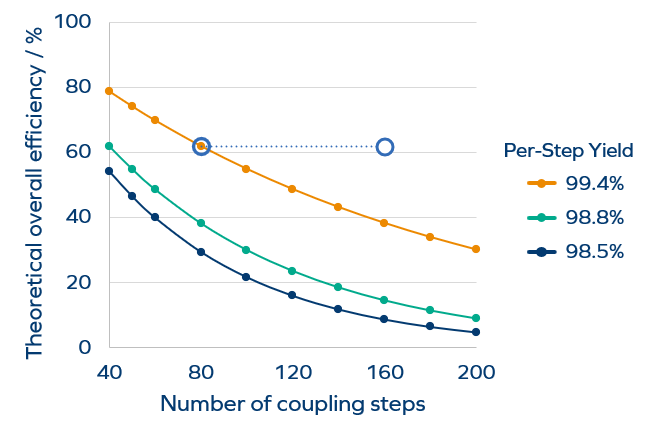
Enzymatic ligation has become an increasingly relevant topic in oligonucleotide manufacturing. One obvious reason is the growing interest in longer and more complex RNA molecules. As sequences get longer, conventional solid-phase synthesis becomes more demanding, particularly when cumulative coupling losses lead to exponentially lower crude purity. But achieving new lengths is only part of the story.
Ligation-based approaches are also being explored for shorter therapeutic oligonucleotides, including ASOs and siRNA. Here, the rationale can be different. Instead of synthesizing a complete strand in one continuous process, shorter chemically synthesized fragments are produced separately and then joined enzymatically. Depending on the molecule and process design, this may create different options for scale-up and process efficiency or offer another way of dealing with certain impurities.
These potential advantages are highly process-specific, however. Fragment synthesis needs to deliver consistently high coupling efficiencies, while ligation and downstream processing must perform well enough to compete with an already highly optimized linear process. This is particularly relevant for siRNA, where linear manufacturing is well established, with substantial regulatory precedent worldwide, and remains the most straightforward route for many programs. Fragment ligation may nevertheless become particularly interesting in selected cases, including at very large manufacturing scales.
At BioSpring, linear solid-phase synthesis remains an established and important manufacturing platform, including long and chemically modified RNA. Our work with fragment ligation therefore does not start from the assumption that one technology should replace the other. Instead, it adds another option where the characteristics of a particular molecule or manufacturing process make a different approach worth considering.
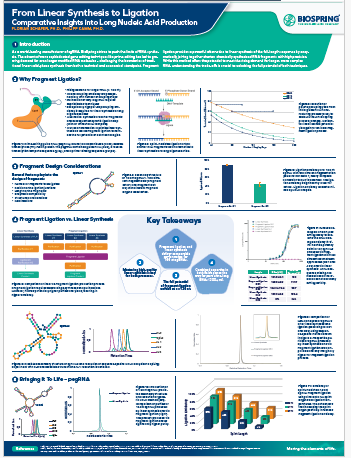
Download our recent poster:From Linear Synthesis to Ligation - Comparative Insights Into Long Nucleic Acid Production
Where fragment ligation can make a difference
Our work to date has focused particularly on utilizing fragment ligation for long (>100 nt) and very long (>130 nt) RNAs, such as guide RNAs. For these molecules, the rationale for evaluating fragment ligation is straightforward. Every additional nucleotide adds another synthesis cycle. Even when individual coupling steps perform very well, small losses accumulate over a long sequence and can eventually affect overall yield and product quality. Purification can become increasingly demanding as well.
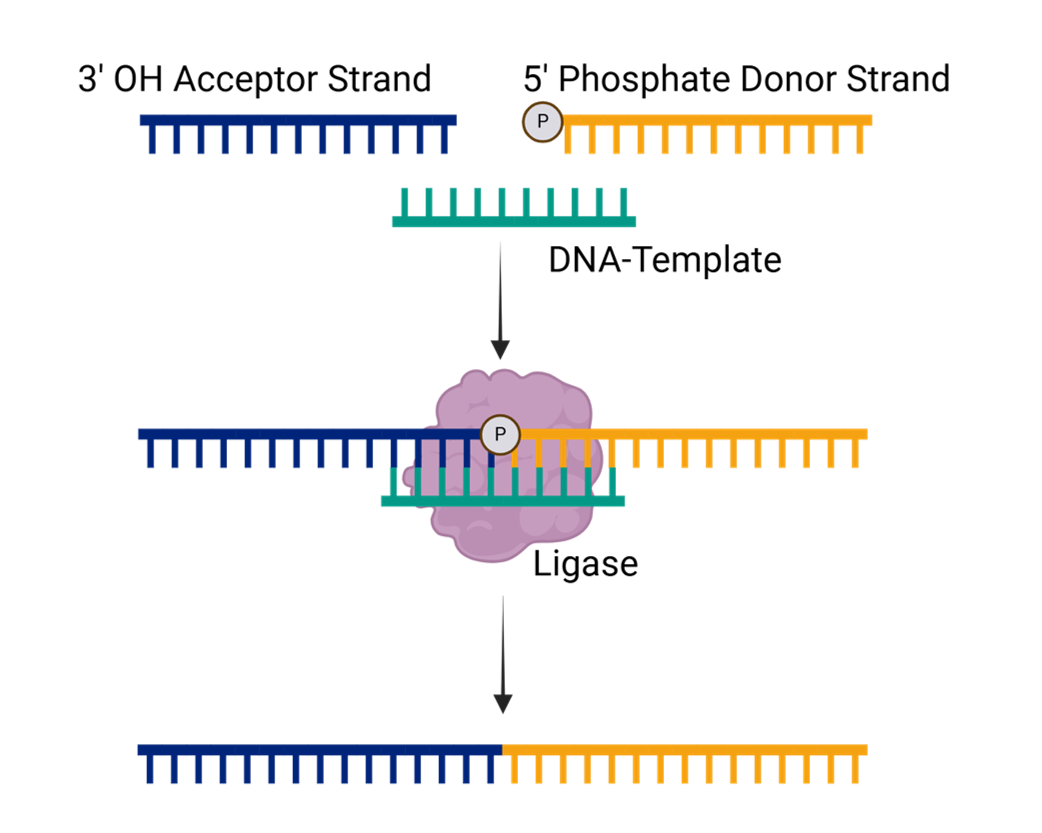
Fragment ligation changes that manufacturing route. The full RNA sequence is divided into shorter fragments, which are first produced individually by chemical synthesis. These fragments are then assembled enzymatically to generate the full-length product, for example, through splint-mediated ligation.
The benefit depends heavily on the molecule.
In BioSpring’s studies with a 100 nt guide RNA, linear synthesis and fragment ligation delivered comparable performance. In another study with a 160 nt sgRNA, the picture was different: the ligation process resulted in higher product purity than linear synthesis.
This is also why we would avoid defining a simple sequence-length threshold at which one technology suddenly becomes preferable. Length certainly matters, but so do the way fragments are designed, the position of the ligation sites, secondary structure and chemical modifications. Enzyme compatibility can influence the outcome as well. The manufacturing strategy needs to account for these factors together.
Good ligation starts with good fragments
There is another important aspect that can easily get lost when enzymatic ligation is discussed as an alternative synthesis technology: the fragments still have to be made.
Their quality has a direct influence on the subsequent ligation step. In our studies, higher-quality starting fragments were associated with better ligation efficiencies. Strong capabilities in chemical synthesis and purification therefore remain highly relevant even when the final molecule is assembled enzymatically.
This connection is important for how BioSpring approaches the technology. Fragment ligation builds on the knowledge gained from manufacturing long and complex oligonucleotides by established chemical synthesis. It adds another process step and another set of possibilities, but it does not remove the need to understand the underlying chemistry.
Moving from a successful reaction to a manufacturing process
Achieving an efficient ligation reaction at the development scale is one thing. Translating it into a process suitable for larger-scale manufacturing raises a different set of questions.
Individual fragment production has to remain consistent. The ligation reaction itself needs to perform reliably as scale increases, and downstream processing must handle the resulting product and impurity profile. Ultimately, what matters is whether the complete process can deliver the required product quality in a robust manufacturing setup.
BioSpring has built extensive experience in transferring linear guide RNA processes from development into larger-scale manufacturing, with scalability of both synthesis and purification considered from the outset. We have applied the same principles to our fragment ligation process, allowing scale-up requirements to be addressed early in development. Close collaboration between process development and manufacturing has supported the transfer into larger-scale production, including under GMP, while maintaining process performance and product quality.
The growing interest in enzymatic ligation is therefore broader than the question of how to make an exceptionally long RNA. Long guide RNAs provide a particularly clear use case and are an area in which BioSpring has already generated substantial process experience. At the same time, developments in fields such as siRNA suggest that fragment-based manufacturing concepts may become relevant for a wider range of therapeutic oligonucleotides.
Which route makes sense depends on the program
For some programs, established linear synthesis may remain the most appropriate approach. For others, fragment ligation may provide useful advantages as manufacturing requirements evolve. The decision also needs to consider factors beyond process performance alone. Compared with conventional linear synthesis, regulatory precedent for ligation-based manufacturing is still more limited, and intellectual property or freedom-to-operate considerations may also play a role. Having experience with both approaches gives BioSpring the opportunity to evaluate these factors alongside the actual process challenge rather than committing to a single manufacturing concept from the outset.
This month's Product in focus
CpG 7909: An Off-the-Shelf CpG ODN for Immune Stimulation
CpG ODNs play an unusual immunostimulatory role unlike other oligonucleotides: their biological activity relies on recognition by the immune system. These short, single-stranded DNA molecules contain unmethylated CpG motifs that resemble microbial DNA. Following uptake into immune cells, the motifs are recognized by Toll-like receptor 9 (TLR9), triggering downstream signaling and stimulating an immune response. This makes CpG ODNs particularly interesting as functional components of vaccines and immunotherapeutic approaches.
BioSpring's CpG 7909, also known as ODN 2006, is immediately available off the shelf in research-grade, non-GMP TOX, and GMP quality. An established multi-kilogram manufacturing process supports larger requirements, and BioSpring-produced GMP material has already been used in clinical trials.
For clinical development, BioSpring offers a characterized reference standard, customized drug product release testing and stability studies. DMF, ASMF and Q-IMPD documentation is available to support IND/IMPD submissions and accelerate filing preparation.
“For development teams, the combination of immediate availability of material and regulatory filing packages and an established manufacturing process can be particularly valuable when timelines are tight and material requirements increase over the course of a program.”
Dr. Henrik Koch
Head of Project Management Gene Modulation
BioSpring's off-the-shelf CpG 7909 combines immediate availability with established manufacturing and analytical and regulatory support for drug development programs.
Beyond CpG 7909, BioSpring also manufactures customer-specific CpG ODNs, including conjugated formats, to support individual clients’ program requirements.
To learn more about CpG 7909 availability and supporting services, contact us directly.
Supporting your CpG ODN program
Off-the-shelf material
CpG 7909 is immediately available in different quality grades: R&D, non-GMP TOX, and GMP.
Established manufacturing at scale
An established multi-kilogram process supports continued supply as requirements increase.
Characterized reference standard
Supports precise quality control and batch-to-batch consistency.
Drug product analytical support
Customized release testing and stability studies are available.
Validation- and QC-ready methods
Methods developed with applicable ICH guidelines in mind support cGMP testing, validation and stability studies.
Regulatory support
DMF, ASMF and Q-IMPD documentation supports IND/IMPD submissions and accelerates filing preparation.

Research insights
Full Sequence Confirmation of a 100mer sgRNA with Targeted RNase H Digestion
Confirming the complete sequence of longer guide RNAs by mass spectrometry remains challenging. Direct fragmentation of these molecules can produce highly complex spectra. Enzymatic approaches can simplify sequence confirmation but the use of multiple RNases and parallel digestions introduces its own practical limitations. In a publication in Analytical and Bioanalytical Chemistry, BioSpring’s Christopher Gawlig and Michael Rühl, together with their colleagues, investigated a more targeted approach based on RNase H and customized DNA/RNA hybrid probes.
RNase H selectively cleaves RNA within RNA/DNA duplexes. By designing GAPmer-like probes to direct cleavage to defined positions, the team generated smaller, overlapping sgRNA fragments that could be analyzed by LC-MS/MS. An optimized multi-site probe enabled complete sequence confirmation of a model 100-nucleotide sgRNA at single-base resolution. The approach also distinguished common synthesis-related impurities, including truncated and elongated sequences.
For analytical development and QC teams, the method represents an alternative strategy for mass spectrometry-based sequence confirmation of longer RNA molecules without requiring ultra-high-resolution instrumentation. Probe design remains critical, particularly for modified sgRNAs, as 2′-O modifications at the intended cleavage sites prevent RNase H cleavage. Where suitable cleavage sites are available, the approach could expand the options for detailed sequence and impurity characterization of sgRNAs and potentially other long RNA molecules.
Reference:
Gawlig, C. et al. “Full sequencing of 100mer sgRNA via tandem mass spectrometry by targeted RNase H digestion with customized probes.” Analytical and Bioanalytical Chemistry (2025). DOI: 10.1007/s00216-025-05737-y. https://link.springer.com/article/10.1007/s00216-025-05737-y
To learn more, don't hesitate to contact us.
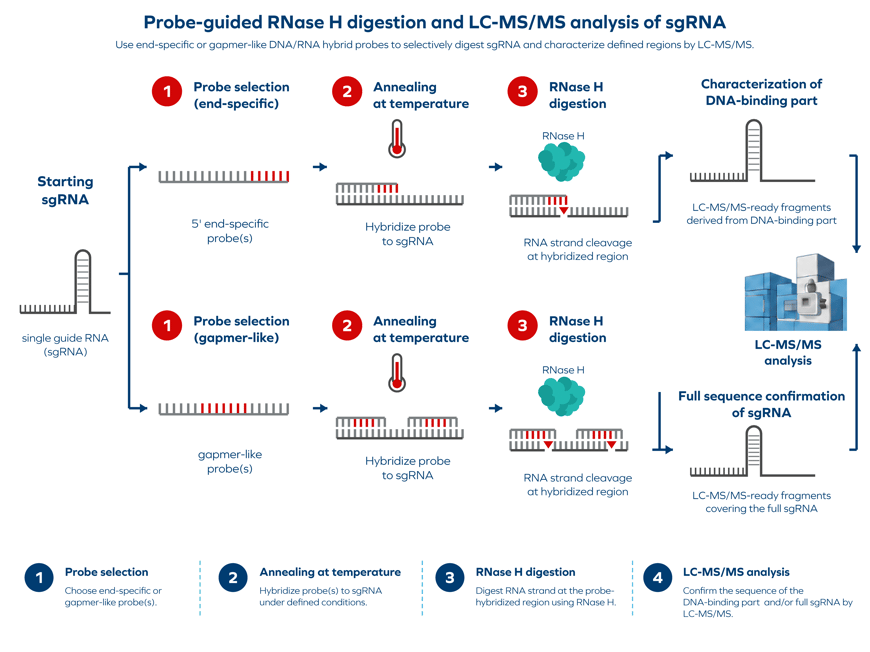
Figure 1: Graphical Abstract
Get to know our experts
Dr. Jan Nickolaus (Head of Quality Control)
You’ve gone from being a QC lab lead at BioSpring about ten years ago to leading one of the company’s largest departments. How have you experienced that journey yourself?
It happened much more gradually than it might look from the outside. I never came to work one morning and suddenly felt like I was running a large organization. The responsibilities simply grew over time, first for projects and methods, then for teams, and eventually for a department with many different functions and specialists.
One thing I had to learn was that you cannot, and should not, try to solve everything yourself. At some point your job becomes much more about putting good people in the right positions, trusting them and giving them the room to make decisions. I am very fortunate to have an excellent leadership team around me.
At the same time, I try not to become too detached from the actual work. I still like knowing what is happening in the labs and talking directly to people. Once you only see an organization through reports and meetings, I think you lose something important.
QC is sometimes seen as the department that gives a final “pass” or “fail” to a batch. What does that picture miss about what QC actually does?
Quite a lot, actually. Release testing is certainly an important and very visible part of QC, but the analytical work behind a product starts much earlier.
Before we can make a meaningful decision about a batch, we need methods that are suitable for the molecule and for the question we are asking. That can involve characterization, understanding impurity profiles, supporting process development, method validation, stability studies and, of course, routine testing later on.
So when QC finally says that a batch meets its specifications, that decision is based on much more than one set of results at the end of manufacturing. Ideally, we have built up a good analytical understanding of the product long before that point.
For me, that is really the core of QC: generating data you can rely on and understanding what those data actually mean.
The better our analytical tools become, the more we can see. Can you reach a point where knowing more about every tiny impurity is no longer necessarily useful?
Absolutely. Sensitivity is valuable, but sensitivity by itself is not the objective.
Modern analytical technologies allow us to detect things that would have been very difficult to see years ago. That is a major advantage. But detecting a signal and understanding its relevance are two different things.
The important questions are: What are we actually looking at? Where does it come from? Is it consistently present? Does it tell us something relevant about the process or the product? And does that information change a decision?
You can always generate more data. The difficult part is turning those data into knowledge. In QC, more information is useful when it helps us understand the molecule better or make a better scientific decision. Simply having a longer list of peaks does not automatically achieve that.
If two analytical methods tell slightly different stories about the same oligonucleotide, which one do you believe?
Neither one automatically wins.
Different analytical methods look at a molecule from different perspectives. Every technique has things it does very well and things it does less well. If two methods appear to disagree, the first reaction should therefore not be to decide which result we prefer. It should be to understand why they are different.
Very often, that difference is actually useful. It can tell you that the methods are measuring different properties or that there is something about the sample that you have not fully understood yet.
That is why orthogonal analytical approaches are so valuable. One method can confirm, challenge or add context to another. In the end, I would much rather have two methods that force me to think about the result than one method that gives me a very clear answer to the wrong question.
You lead a department whose job sometimes includes telling people things they would rather not hear. What makes someone good at QC beyond being scientifically right?
Being scientifically right is obviously important, but it is not enough.
You have to be able to explain why a result matters and what it means for the people who need to make a decision. That requires good communication, especially when the message is not the one somebody was hoping for.
I also think calmness helps. An unexpected analytical result does not become easier to understand because everybody becomes nervous about it. You need to look at the facts, ask the right questions and work through the issue systematically.
QC should not see itself as the department that simply says no. We work with manufacturing, project management, development and our clients to understand problems and find a scientifically sound way forward. Sometimes that means saying something uncomfortable. But if people know that you are being transparent and trying to solve the problem with them, those conversations are usually much easier.
What is more satisfying in QC: a perfectly boring result, or an unexpected result that you finally manage to explain?
A perfectly boring result is highly underrated in QC.
If everything looks exactly as expected, the method works, the process behaves as it should and there are no surprises, that is actually a very good day.
But scientifically, of course, an unexpected result can be much more interesting. There is a certain satisfaction in starting with something that does not make sense and eventually understanding where it comes from. You usually learn much more from those situations than from the hundred samples before it that behaved perfectly.
So I would probably say: I enjoy explaining the unexpected result once. After that, I am quite happy for it to become boring again.
Explore More
Analytical Strategies for Diastereomers in Oligonucleotide Development
.png?width=250&name=Nils%20resize%20(1).png)
Join us for our upcoming live webinar on Tuesday, September 22, 2026, where Nils Schomann, QC Manager Method Development, will explore the analytical challenges of characterizing complex diastereomer mixtures in oligonucleotide therapeutics. He’ll discuss how phosphorothioate linkages contribute to diastereomeric complexity and highlight analytical approaches for their characterization, including HPLC fingerprinting, ³¹P NMR, and shortmer studies.
Click here to register for the webinar
Date: September 22, 2026
Time: 7:30 AM PT | 10:30 AM ET | 4:30 PM CEST
Platform: GoTo Webinar
IN CASE YOU MISSED IT
Mastering Manufacturing Challenges in Oligonucleotide Production - From Process Development to Commercial Solutions

Originally presented at TIDES USA, Vice Head of Manufacturing Sven Warhaut, PhD, shares insights from BioSpring’s experience addressing manufacturing challenges across synthesis, purification, ultrafiltration, and lyophilization. Using examples from guide RNA, siRNA, and ASO production, the presentation highlights approaches to improve process control, scalability, and product quality.
CONFERENCES AHEAD
Fall Conference Season is Just Around the Corner! Meet BioSpring at OTS and TIDES Europe
We’re headed to the 22nd Annual Meeting of the Oligonucleotide Therapeutics Society (OTS) in Denver! Visit us at Booth 1 to connect with the BioSpring team and learn more about our oligonucleotide manufacturing and analytical services, supporting programs from research through commercial development. Don’t miss Dr. Timo Pöstges-Janotta, Head of Quality Control Lab, who will be presenting on Sunday, October 11, 2026, on “Control Strategies for Therapeutic Oligonucleotides: Key Insights & Regulatory Expectations.” He’ll share key regulatory insights and practical strategies for establishing commercially ready control strategies that balance regulatory compliance with operational efficiency.
Dates: October 11-14, 2026
Location: Colorado Convention Center in Denver, Colorado, USA
Booth: 1
Going to TIDES Europe? Come visit us at Booth 511! We’re looking forward to connecting with clients, partners, and colleagues from across the oligonucleotide space. Stop by our booth to catch up with the BioSpring team and chat about our different nucleic acid services. We look forward to seeing you in Amsterdam!
Dates: November 3-5, 2026
Location: RAI Amsterdam in Amsterdam, Netherlands
Booth: 511
Whether you're looking for details on manufacturing, analytics, or our integrated services, our updated website helps you get the right information quickly and effortlessly.
WHERE TO FIND US NEXT
Upcoming Events
- All
- attending
- booth
- talk
September 22 - 23, 2026 | Hannover, Germany
September 23 - 25, 2026 | Arlington, Virginia, USA
October 11 - 14, 2026 | Denver, Colorado, USA
No results found