

When you hear “oligonucleotides,” Hollywood blockbusters and bestselling novels probably aren’t the first things that come to mind. But the truth is: the science behind oligonucleotides -short strands of DNA or RNA- has already made its way to pop culture more often than you might realize.
Let’s take a closer look at some familiar stories where science and storytelling overlap.
Jurassic Park: The Power of the Genetic Code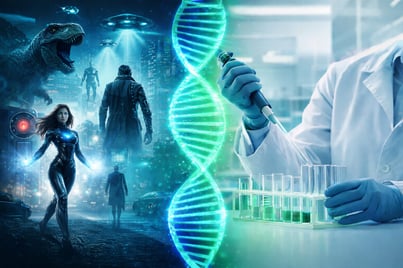
The idea of “bringing back dinosaurs” comes straight from DNA – the famous double helix. While the movie takes some creative liberties (sorry, amber-preserved mosquitoes won’t give us intact T. rex DNA), the fascination with modifying genetic code echoes real-world biotechnology. Oligonucleotides, in contrast, represent today’s very real tools for editing and understanding genes.
Science Fiction’s Favorite Trope: Designer Cures
From futuristic series to superhero movies, the plot often revolves around a miracle therapy that “switches off” a disease or even enhances human abilities. This might sound far-fetched – but antisense oligonucleotides (ASOs) work in a similar way by silencing faulty genes. Real science is catching up to science fiction.
CSI and the DNA Detective Stories
Crime shows like CSI and NCIS have made DNA testing a household term. What the scripts often leave out: oligonucleotides play a crucial role in PCR (polymerase chain reaction), the method that allows scientists to amplify tiny amounts of DNA for forensic analysis. Without synthetic oligos, these crime-solving techniques wouldn’t exist.
Pandemic Plots – Vaccines and RNA
In recent years, films and series about global outbreaks have surged, e.g. Contagion and Outbreak. Unlike fiction, the real-life response to COVID-19 relied on mRNA vaccines – a breakthrough built on decades of RNA and oligonucleotide research. What once felt like science fiction is now part of our everyday reality.
Novels and Thrillers – The “Genetic Switch” Motif
Best-selling thrillers often present genes as simple “switches” that can be turned on or off to control traits or diseases. While this is exaggerated, the idea is based on real science, where tools like oligonucleotides can regulate gene activity. For example, in Next by Michael Crichton, genetic modifications can directly influence behavior and physical traits, reflecting the idea of controlling genes—though in a much more simplified and dramatic way than in reality.
Why it matters
Pop culture often simplifies, exaggerates, or dramatizes science, yet it reflects the genuine excitement surrounding modern biotechnology. Oligonucleotides may not bring dinosaurs to life or create superheroes, instead, they are driving progress in treating rare diseases, developing new therapies, and shaping the future of medicine.
At BioSpring, we are proud to help turn these ideas from fiction into reality.
So next time you watch a sci-fi blockbuster, remember: the science behind oligonucleotides may be closer than you think.